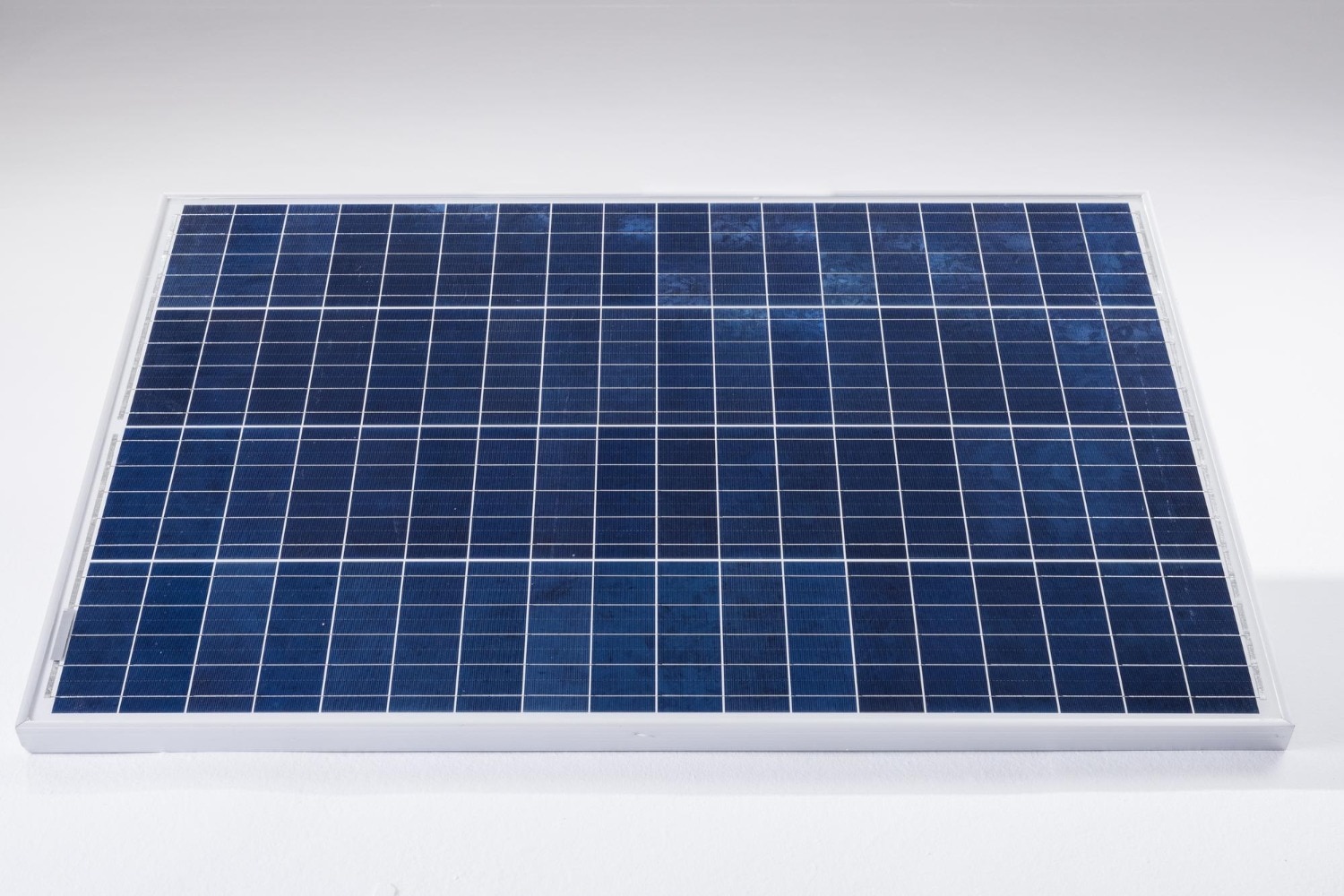
A panel’s wattage and efficiency do not tell you whether it will fit your roof, work safely with your inverter, or deliver the expected annual energy. By checking usable roof area, sunlight, electrical limits, system losses, warranties, and site constraints, you can compare panel proposals on output and total suitability rather than marketing labels.
Key takeaways
- Size the system against roof area, sun exposure, inverter limits, and household demand.
- Measure usable roof space after setbacks, vents, shading, and maintenance access.
- Compare temperature coefficient, efficiency, power tolerance, and degradation—not wattage alone.
- Demand written warranty terms, structural checks, electrical approvals, and inverter compatibility.
How Much Solar Capacity Can Your Property Actually Use?
The tightest ceiling controls your solar panel capacity, so calculate each limit before selecting a module.
- Convert 12 months of bills into annual electricity consumption. Divide that figure by a site-specific yield in kWh per installed kW. For example, 6,000 kWh ÷ 1,200 kWh/kW equals a 5 kW DC target.
- Use a yield model based on available sunlight, roof orientation and tilt, weather, temperature, shading, soiling, wiring, inverter losses, and system availability. A quote based only on module wattage or efficiency is incomplete.
- Measure usable roof area after setbacks, parapet walls, tanks, skylights, vents, ridges, valleys, access routes, and maintenance clearance. Check length, width, and clamp zones: two 450 W modules can occupy different areas, and a smaller lower-wattage module might let you install one extra panel.
- Compare the design with peak demand and the utility’s interconnection limit. Peak demand does not set annual energy needs, but it exposes an undersized service, high inverter loading, or voltage problems.
- Ask the utility or installer for the interconnection study. Export limits, service-panel capacity, phase configuration, voltage rise, anti-islanding behaviour, and IEEE 1547-2018 inverter functions can require export control, a service upgrade, or a different inverter.
Do not add a generic bifacial gain to the estimate. Rear-side output depends on reflectance, module height, spacing, rear obstructions, and rear irradiance; request a bifacial-specific model if those conditions exist.
How Should You Measure the Roof and Sun Exposure?
A 450 W panel is not necessarily the best fit: two modules with that rating can have different lengths and widths. Measure each roof plane, including length, width, ridges, valleys and roof edges, then subtract unusable areas to find the usable roof area.
Mark parapet walls, water tanks, skylights and vents, access routes, and the maintenance clearance specified by the racking manufacturer and local fire rules.
| Feature | What to measure | Why it matters |
|---|---|---|
| Roof direction | Compass bearing of each roof plane | A south-facing plane in the northern hemisphere usually receives more annual sunlight than an east- or west-facing plane; confirm the local optimum with an energy model. |
| Roof tilt | Angle from horizontal using an inclinometer or digital level | Tilt changes yearly production, wind exposure, drainage and row spacing. |
| Obstructions | Exact position and height of walls, tanks, vents and skylights | Shadows and required gaps can remove entire panel rows, not just a few square metres. |
| Shade | Shadow photographs or a shade survey at morning, midday and afternoon across seasons | Trees and buildings change output hourly; string layout determines how much a shaded panel affects its neighbours. |
| Access clearance | Walking routes and space around equipment | Filling every gap makes cleaning, inspection and repairs difficult. |
Ask for annual yield in kWh per installed kW using orientation, tilt, horizon shade and system losses. Do not apply a generic bifacial gain: rear output depends on reflectance, elevation, spacing and rear obstructions. A smaller, lower-wattage module can deliver more total roof capacity if it lets another panel fit.
Which Panel Type and Datasheet Specifications Fit the Site?
Choose the module that produces the most usable roof capacity, not the highest rated power in watts. Check each panel’s length, width, clamp zones, weight, and required clearances against the roof layout; a smaller 430 W module can outperform a larger 450 W module if it lets you fit one more panel.
| Panel type | Physical fit and behaviour | Best fit |
|---|---|---|
| Monocrystalline | Highest module efficiency in a compact area; rigid and relatively heavy; compare its negative temperature coefficient on hot roofs | Space-limited roofs |
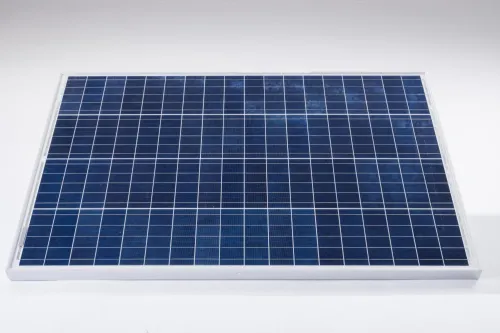
| Polycrystalline | Usually lower efficiency, so it needs more area for the same output; rigid construction suits standard framed mounting | Large, unobstructed roofs |
| Thin-film | Lower efficiency and larger area requirement; some products are lighter or flexible, but mounting, fire, and attachment methods vary | Lightweight structures or curved surfaces approved for that product |
Read the datasheet beyond the headline wattage. STC uses 1,000 W/m² irradiance, a 25°C cell temperature, and AM1.5 spectrum; NMOT indicates performance closer to operating conditions. Compare the temperature coefficient, open-circuit voltage, short-circuit current, dimensions, weight, maximum system voltage, and degradation warranty.
Confirm UL 61730 or IEC 61730 safety certification and IEC 61215 design qualification, then check separate wind, snow, hail, salt-mist, fire, and mounting requirements for your site. Efficiency alone does not predict annual output: compare estimated kWh per installed kW after shading, temperature, wiring, inverter, and soiling losses.
Will the Panels Work With the Inverter and Produce the Promised Output?
A panel’s wattage does not prove that the proposed array will work with the inverter. Reject an estimate until the designer shows the electrical checks and annual yield calculation for your roof.
1. Match the module datasheet to the inverter. Check the array’s open-circuit voltage at the property’s lowest expected temperature; multiply it by the number of modules in each string. That cold-weather result must stay below the inverter’s maximum DC voltage.
Check operating voltage at high temperature too: it must remain inside the inverter’s MPPT voltage range.
2. Check current, not only total kilowatts. A string’s maximum current must remain below the inverter’s maximum input current, including the extra current created when strings are connected in parallel. Ask for the proposed string diagram and confirm that DC disconnects, fuses, surge-protective devices, and any rapid-shutdown or arc-fault function match the inverter architecture.
3. Map shade onto the string design. In a series string, one shaded module can limit the string’s current; bypass diodes reduce hot-spot risk but do not restore lost energy. Module-level electronics can improve partial-shade performance, but add rooftop connectors, communications equipment, and failure points.
4. Demand annual kWh per installed kW, calculated from your tilt, orientation, shading, weather, temperature, availability, soiling, inverter losses and cable losses. Compare the model’s inputs with PVWatts-style loss categories, then reduce future output by a stated degradation assumption; 0.5% per year is a common crystalline-silicon fleet benchmark, not a guarantee.
What Warranties, Roof Checks, and Electrical Approvals Should You Demand?
Demand a written package covering warranties, roof capacity, certifications, protection, utility approval, and post-installation responsibility. The quote must identify the exact module, inverter, racking, disconnects, surge-protective devices, and labels—not merely their brands.
| Document or check | Verify in writing | Risk controlled |
|---|---|---|
| Product warranty | Materials and workmanship term, labour, removal, shipping, replacement, and claim process | Defective equipment and disputed costs |
| Performance warranty | First-year output allowance, annual degradation rate, testing method, and remedy | Output falling below the promised level |
| Module certification | IEC 61215 design qualification and IEC 61730 safety certification | Construction and safety test compliance, not site suitability |
Ask a structural professional to assess module weight, racking, ballast, wind uplift, snow load, attachment spacing, and concentrated loads together. Check roof age and remaining membrane life; installing on a roof due for replacement creates removal and reinstallation costs.
- Require a site-specific statement for wind, hail, fire, salt mist, and mounting conditions. IEC certification does not replace this check.
- Match DC and AC disconnect ratings to maximum voltage and current. Confirm the surge-protective device and arc-fault protection suit the inverter architecture.
- Where NEC 690.12 applies, specify rapid-shutdown equipment, array boundaries, wiring, and labels.
- Obtain the local utility or DISCOM interconnection, net-metering, sanctioned-load, and meter requirements before ordering.
- Assign in writing who handles permits, inspection, commissioning, warranty claims, roof leaks, monitoring, and removal.
Rupribha Electricals (OPC) Private Limited can be asked to separate structure, inverter, and protection responsibilities in the quotation so omissions are visible before payment.
Related products
 | Solar Products Our **Solar Monocrystalline Module** offers high efficiency, durability, and superior performance, even in low-light conditions. View product → |
 | Solar Products Solar Polycrystalline Modules are efficient and cost-effective solar panels made from multiple silicon crystals. View product → |
Frequently asked questions
How do I calculate how much solar capacity my property can use?
Compare four limits: annual electricity demand, usable roof area, local sun exposure, and the inverter’s permitted DC input. The smallest limit sets the practical system size.
How should I measure my roof before choosing solar panels?
Measure each roof plane, mark north direction, note pitch and obstructions, and remove space for parapet setbacks, vents, chimneys, shade, walkways, and maintenance access.
Which solar panel specifications matter for a residential property?
Compare rated power, physical dimensions, efficiency, temperature coefficient, power tolerance, maximum system voltage, operating current, and the product’s degradation warranty.
How can I check whether panels will work with the inverter?
Match the panel’s open-circuit voltage, maximum-power voltage, short-circuit current, and maximum-power current against the inverter’s MPPT voltage range, maximum DC voltage, and input-current limits.
What warranties, roof checks, and approvals should I demand?
Request product and performance warranty documents, a roof-load and waterproofing inspection, an earthing and protection design, installation drawings, and the approvals required by your electricity distribution company.
Related product
 | Solar Products Solar Thin Film Modules are advanced photovoltaic panels known for their lightweight, flexibility, and high efficiency in low-light conditions. View product → |